
About
Artin Mahboubi, L.Ac.
Bridging Immunology Research & Clinical Excellence
Artin Mahboubi is a clinical practitioner and research scientist dedicated to bridging the gap between advanced bioscience and traditional healing. With a career spanning oncology, neuropharmacology, and immunology, Artin brings a “systems biology” perspective to Traditional Chinese Medicine (TCM).
A Legacy of Scientific Foresight
Artin’s career began in the high-stakes world of oncology research. As early as the 1980s, he was a proponent of individualized treatment protocols based on molecular analysis—a foresight that defined his commitment to treating the unique patient rather than just the diagnosis. Before establishing Summit Healing Arts in Washington, D.C., Artin held research positions at the National Institute of Mental Health (NIMH), the Lombardi Cancer Center, and the La Jolla Institute for Allergy and Immunology.
Clinical Philosophy: The Body as a Sophisticated Factory
“I view the body as a sophisticated factory. My goal is to optimize the internal machinery—improving nutrient delivery through systemic blood flow and enhancing waste removal—so the body can naturally repair its own structural components like collagen and elastin.”
At his practice in Dupont Circle, Artin specializes in:
-
Immune System Regulation: Applying immunologic insights to support patients with autoimmune challenges and chronic inflammatory conditions.
-
Neuro-Vascular Support: Utilizing neuropharmacological expertise to address chronic pain, migraines, and stress-related disorders.
-
Precision Longevity: Applying “Precision TCM” to promote systemic health and cellular regeneration. Preventive medicine was my fathers work in medicine and we all know its the best way. Seeing propensities and patterns in patients and taking necessary steps to ensure longevity and higher quality life.
Specialized Care in Dupont Circle
At his practice in the heart of Dupont Circle, Washington D.C., Artin specializes in:
Auto-Immune conditions and weakened Immunity, Migraine, although many conditions are treated successfully with acupuncture and herbs. The beauty of this form of medicine is that it is about as individualized as it gets.
Research Portfolio & Peer-Reviewed Contributions
Artin is a board-certified Acupuncturist (NCCAOM), Chinese Herbologist, and detoxification specialist. His work is grounded in rigorous scientific evidence, with over 20 peer-reviewed publications spanning neuropharmacology, cancer research, host response, and immunology.
Articles and Publications (partial list):
p53 regulates apoptosis, synovitis, and joint destruction in collagen-induced- arthritis. Am J Pathol. 2002 Jan;160(1):123-30.
Heat-shock protein 70 inhibits apoptosis by preventing recruitment of procaspase-9 to the Apaf-1 apoptosome. Nat Cell Biol 2000 Aug;2(8):469-75
Expression of Fas ligand in activated T cells is regulated by c-Myc. J Biol Chem 2000 Mar 31;275(13):9767-72
Protein kinase C theta cooperates with calcineurin to induce Fas ligand expression during activation-induced T cell death. J Immunol 1999 Dec 1;163(11):5813-9
HIV-1 Vpr suppresses immune activation and apoptosis through regulation of nuclear factor kappa B. Nat Med 1997 Oct;3(10):1117-23
FAS-induced apoptosis is mediated via a ceramide-initiated RAS signaling pathway. Immunity 1995 Apr;2(4):341-51
Chapter 9: The end of the (cell) line: Methods for the Study of Apoptosis in Vitro. Methods Cell Biol. 1995;46:153-85.
Cell-autonomous Fas (CD95)/Fas-ligand interaction mediates activation-induced apoptosis in T-cell hybridomas. Nature 1995 Feb 2; 373(6513):441-4
Functional Myc-Max heterodimer is required for activation-induced apoptosis in T cell hybridomas. J Exp Med 1994 Dec 1; 180(6):2413-8
Promotion and inhibition of activation-induced apoptosis in T-cell hybridomas by oncogenes and related signals. Immunol Rev 1994 Dec;142:321-42.
Apoptotic cell death induced by c-myc is inhibited by bcl-2. Nature 1992 Oct 8;359(6395):552-4
Potential ligands for opioid receptor single photon emission computed tomography (SPECT) J Med Chem 1992 Jul 24;35(15):2826-35
Interaction of beta-funaltrexamine with [3H]cycloFOXY binding in rat brain: further evidence that beta-FNA alkylates the opioid receptor complex. Synapse 1991 Jun;8(2):86-99
Call (703)963-4555 for your appointment or send an email to reserve your spot.
About Artin Mahboubi
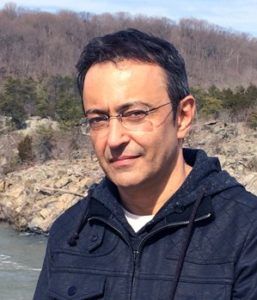
Artin Mahboubi, LAc, DiplAc
is a board certified acupuncturist with a research background in immunology. Artin has helped numerous clients with chronic physical and emotional issues; immune related problems; fertility; and of course stress and pain conditions. He can most likely help you too.